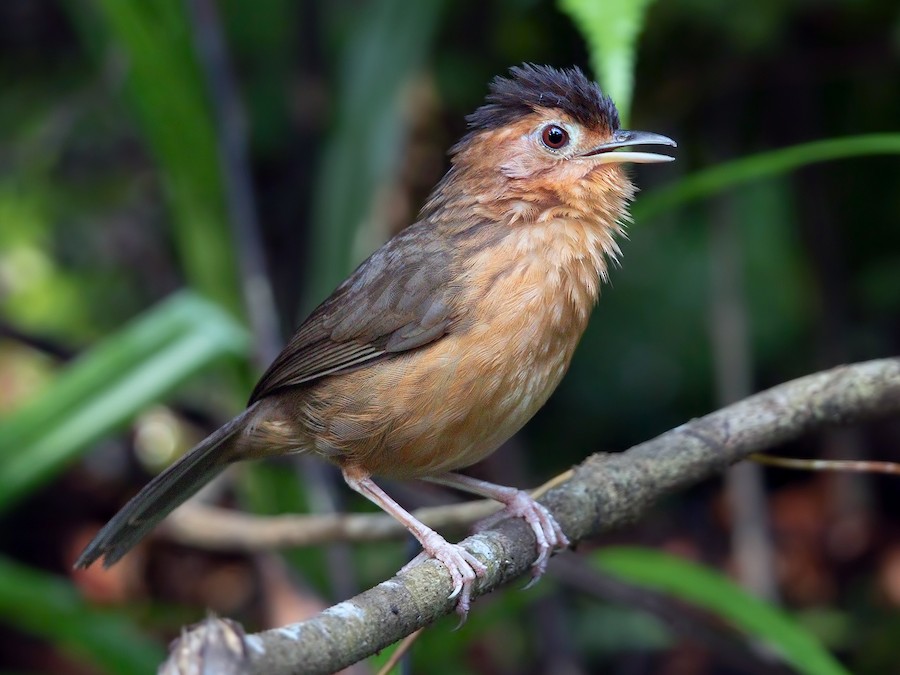
Brown-capped Babbler -රෙදි දියන්/හිස දුඹුරු දෙමළිච්චා/ශ්රි ලංකා බොරග
පිරී දෙමළිච්චා
The Brown-capped Babbler (Pellorneum fuscocapillus) is a small, elusive bird endemic to Sri Lanka, belonging to the Pellorneidae family of ground-dwelling babblers. It is often found in the dense undergrowth of forests and scrublands, making it a challenging species to spot despite its widespread presence. This bird is known for its melodious and repetitive song, which echoes through the forests, especially in the early mornings and evenings.
The Brown-capped Babbler is a small, stout bird, measuring around 15 cm (6 inches) in length. It has a distinctive chocolate-brown cap that contrasts with its warm brown upperparts and lighter buff-colored underparts. The bird’s dark eyes and short, slightly curved beak give it a characteristic appearance, helping birdwatchers identify it in the wild. Its relatively short tail and strong legs indicate its ground-foraging behavior, as it often moves along the forest floor searching for food.
This babbler is primarily found in lowland rainforests, dry-zone forests, and well-wooded home gardens across Sri Lanka. It prefers thick undergrowth and leaf litter, where it can forage undisturbed. The Sinharaja Rainforest, Kitulgala, Kanneliya, and other forest reserves are among the best places to spot this species. Despite its preference for dense forests, it has also been observed in secondary forests and tea plantations, indicating its adaptability to different environments.
The Brown-capped Babbler is a shy and secretive bird, often hiding in thick vegetation. It is more likely to be heard than seen, as it produces a loud, repetitive "pree-pee-pee" or "wheeu-wheeu" call, which helps in identifying its presence. The bird is insectivorous, feeding mainly on small insects, spiders, worms, and other invertebrates found in leaf litter. It forages by scratching the ground with its strong legs, using its beak to pick up hidden prey. Occasionally, it may also consume small berries or seeds.
The breeding season for the Brown-capped Babbler typically occurs between March and September, with peak nesting activity in April and May. It builds a well-hidden, dome-shaped nest on the ground, often concealed within thick vegetation or fallen leaves. The nest is constructed using dried leaves, grass, and twigs, providing excellent camouflage from predators. The female lays 2 to 3 eggs, which are pale whitish or cream-colored with speckled markings. Both parents take part in incubation and feeding the chicks, ensuring their survival until they fledge.
Despite being an endemic species, the Brown-capped Babbler is classified as a species of Least Concern (LC) by the IUCN Red List. However, its population is declining due to habitat loss, deforestation, and fragmentation of forests. Urbanization and agricultural expansion reduce the availability of suitable nesting and foraging grounds. Nevertheless, this species has shown some adaptability, as it is occasionally found in human-modified landscapes such as tea plantations and home gardens.
The Brown-capped Babbler plays a vital role in maintaining forest ecosystems by controlling insect populations and aiding in seed dispersal. It is also a favorite among birdwatchers and ornithologists, as its distinctive call is one of the most recognizable sounds in Sri Lankan forests. This bird is featured in many local birdwatching tours and eco-tourism programs, highlighting its significance in Sri Lanka’s rich avian biodiversity.
The Brown-capped Babbler is a unique and ecologically important bird in Sri Lanka, known for its melodious calls, secretive behavior, and ground-dwelling lifestyle. Protecting its natural habitat is essential for ensuring its long-term survival. Conservation efforts such as forest preservation, reducing deforestation, and promoting eco-tourism can help protect this beautiful bird for future generations.