Sri Lanka Crested Drongo-ශ්රී ලංකා සිළු කවුඩා
The Ceylon Crested Drongo (Dicrurus lophorinus) is a striking bird species endemic to Sri Lanka, primarily found in wet zone forests and foothills, including Sinharaja, Kitulgala, Kanneliya, and other dense, humid environments. Known for its glossy black plumage, prominent curved crest, and deeply forked tail, this drongo is an active and highly intelligent bird, displaying remarkable mimicry skills by imitating the calls of other birds and even small mammals to either deceive predators or manipulate prey. It thrives in dense canopies, perching high in trees while foraging for insects, small vertebrates, and even nectar, making it a critical component of the forest ecosystem. The Ceylon Crested Drongo is known for its bold and aggressive behavior, often fearlessly chasing away much larger birds, including predatory raptors, to defend its territory. Unlike some other drongo species, it has a strong territorial instinct, often engaging in vocal displays and aerial acrobatics to assert dominance.
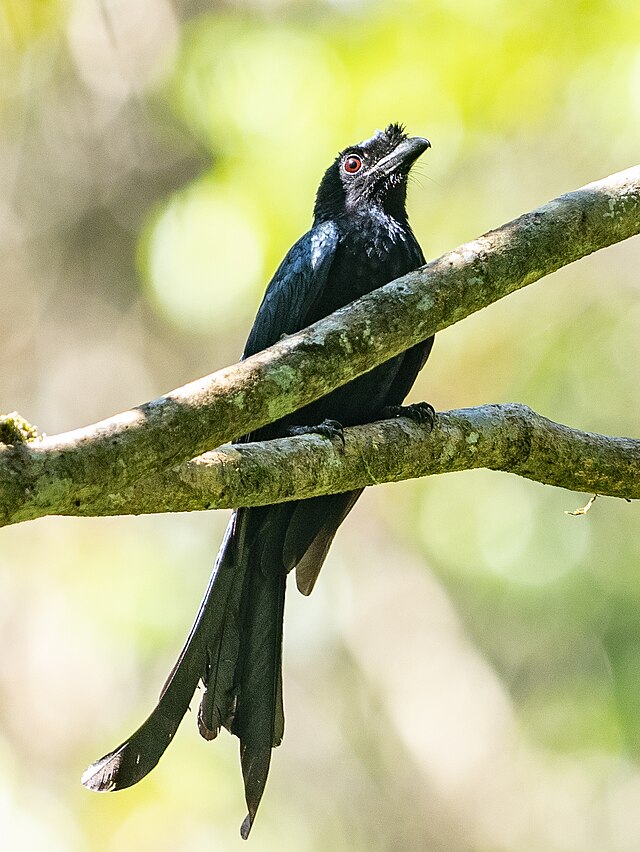
Its call is a mix of sharp whistles, harsh chatters, and melodic notes, making it one of the most distinctive vocalists of the Sri Lankan forests. During the breeding season, which occurs mainly from March to June, this species constructs a small, well-hidden cup-shaped nest in the fork of a tree, often located in dense forest cover to minimize the threat of predation. The female lays two to three eggs, which both parents take turns incubating and feeding once hatched. They exhibit strong parental care, ensuring that the chicks are well-fed and protected until they fledge. The juveniles resemble adults but have slightly duller plumage and lack the fully developed crest that makes this species so recognizable.
Due to its vocal mimicry skills, the Ceylon Crested Drongo often follows mixed-species foraging flocks, benefitting from the presence of other insectivorous birds while also using its deceptive calls to steal food from unsuspecting birds, a behavior known as kleptoparasitism. Despite being a resilient and adaptive species, this bird faces increasing threats from deforestation, habitat fragmentation, and climate change, particularly as Sri Lanka’s lowland rainforests continue to decline due to agricultural expansion and human settlements. Conservation efforts are crucial to preserving the fragile ecosystems where the Ceylon Crested Drongo thrives. Organizations such as the Sri Lanka Wildlife Conservation Society (SLWCS) and the Department of Wildlife Conservation (DWC) work toward protecting Sri Lanka’s endemic species by preserving natural habitats, enforcing anti-logging regulations, and promoting ecotourism. These birds are often spotted by birdwatchers and ecotourists, making them an important attraction for conservation-based tourism. Their presence in a forest indicates a healthy ecosystem, as they play a role in controlling insect populations and maintaining ecological balance.
Unlike many other birds that avoid human presence, the Ceylon Crested Drongo is often bold and inquisitive, sometimes approaching observers out of curiosity. In Sri Lankan folklore, drongos are sometimes associated with mystical qualities, as their ability to mimic sounds has led to various myths surrounding them. Additionally, they are often featured in traditional Sri Lankan bird art and literature, highlighting their significance in the country’s natural heritage. Although they are currently listed as a species of Least Concern on the IUCN Red List, ongoing habitat destruction could push them toward a more vulnerable status in the future. To ensure their survival, conservationists stress the importance of reforestation projects, protected reserves, and sustainable land-use practices to safeguard the biodiversity of Sri Lanka’s rainforests. The Ceylon Crested Drongo, with its intelligent foraging strategies, fearless nature, and remarkable mimicry skills, remains one of Sri Lanka’s most fascinating endemic birds, serving as both a symbol of the country’s rich avian diversity and an integral part of its fragile ecosystem.