The Ceylon Spurfowl - හබන් කුකුලා
The Ceylon Spurfowl (Galloperdix bicalcarata) is a rare and elusive bird endemic to Sri Lanka, primarily inhabiting the dense rainforests and foothills of the island. It belongs to the pheasant family (Phasianidae) and is closely related to junglefowl and other galliform species. This ground-dwelling bird is best known for its secretive nature, loud and haunting calls, and its preference for staying hidden within thick undergrowth. As one of Sri Lanka’s most enigmatic avian species, the Ceylon Spurfowl plays a crucial ecological role in forest ecosystems, particularly in seed dispersal and insect control. Measuring about 33 cm in length, the bird exhibits strong sexual dimorphism, with males displaying more vibrant plumage compared to the relatively subdued coloration of females. The male typically has a reddish face, a dark crown, and well-developed leg spurs, which it uses for defense and territorial fights, while the female has brownish plumage, allowing it to blend seamlessly into the leaf litter.
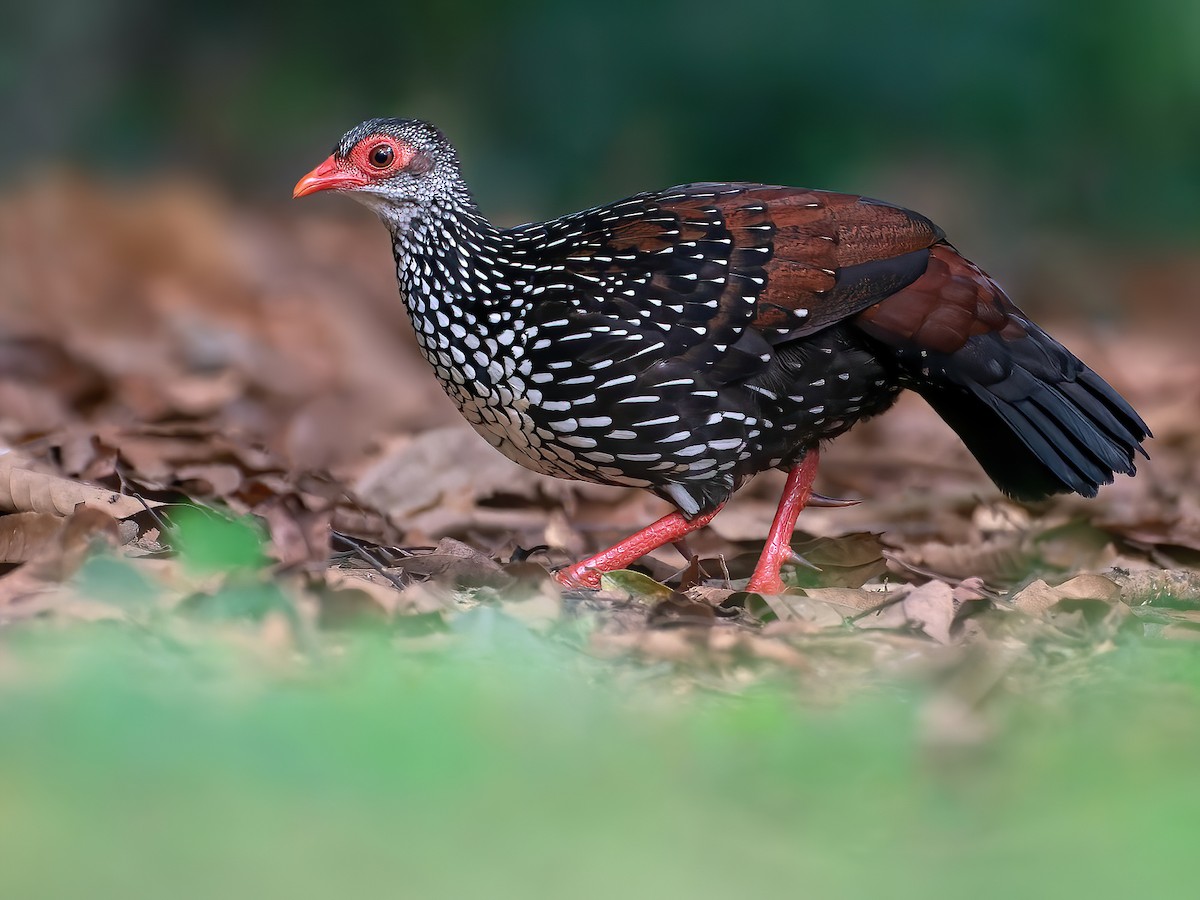
This camouflage is particularly beneficial for nesting and avoiding predators. Unlike many birds that take to the skies when disturbed, the Ceylon Spurfowl is predominantly a terrestrial species, preferring to run swiftly through the undergrowth rather than fly. It is primarily found in Sri Lanka’s wet zone rainforests, such as the Sinharaja Forest Reserve, Kanneliya Forest, Kitulgala, and the Knuckles Mountain Range, thriving in thick jungle terrain where visibility is low and cover is abundant. Because of its elusive nature, it is more often heard than seen, with its calls echoing through the forests at dawn and dusk.
The species is highly territorial, and males are particularly aggressive in defending their home range. The diet of the Ceylon Spurfowl is omnivorous, consisting of seeds, grains, fruits, berries, insects, worms, snails, termites, and ants, which it actively seeks out by scratching through the leaf litter. This feeding behavior plays a significant role in the decomposition process of the forest floor, contributing to soil aeration and nutrient cycling.
The bird’s powerful legs and sharp claws allow it to dig into decomposing logs and uncover hidden invertebrates, making it a crucial part of the forest’s ecological balance. The species is monogamous, with pairs bonding for life and exhibiting strong parental care. The breeding season typically falls between February and May, with the female laying two to four eggs in a shallow ground nest hidden among roots, under shrubs, or within bamboo thickets. Both parents participate in incubation and later in feeding and protecting the chicks, which hatch covered in down feathers and are precocial, meaning they can walk and follow their parents soon after hatching. The young birds remain with their parents for several months, learning crucial survival skills such as foraging and predator evasion. The Ceylon Spurfowl’s vocalizations are a key feature of its behavior, with males producing a series of deep, resonant “kow-kow-kow” notes to mark territory and attract mates. These calls can travel long distances through the dense jungle, serving as an effective communication method within the species. When alarmed, the bird emits sharp, harsh calls to alert its mate or offspring of potential danger. Given its preference for primary forests and undisturbed habitats, the Ceylon Spurfowl is highly vulnerable to deforestation, habitat fragmentation, and human encroachment.
As a result, it is classified as Near Threatened on the IUCN Red List, with conservation efforts focused on preserving Sri Lanka’s remaining rainforests. Logging, land conversion for agriculture, and illegal hunting have contributed to declining population numbers, making the need for conservation initiatives more critical than ever. Efforts to protect the species include the establishment of wildlife reserves, stricter enforcement of hunting bans, and awareness campaigns promoting the importance of biodiversity conservation. The role of the Ceylon Spurfowl in the ecosystem cannot be understated, as it contributes to maintaining insect populations, dispersing seeds, and enriching soil health through its foraging activities. Unlike many galliform birds, which may adapt to secondary forests or farmlands, the Ceylon Spurfowl remains highly dependent on pristine, undisturbed forest environments, making its conservation a direct reflection of Sri Lanka’s overall forest health. Beyond its ecological significance, the bird holds cultural value as part of Sri Lanka’s unique biodiversity, drawing interest from ornithologists, birdwatchers, and conservationists worldwide. Its elusive nature makes it a sought-after species for birdwatchers visiting Sri Lanka, further highlighting the need for ecotourism initiatives that balance human interest with wildlife preservation.
Although spotting the Ceylon Spurfowl in the wild is a rare and rewarding experience, the challenge lies in its preference for remaining hidden within dense jungle foliage. Observers are often guided by its calls, following the sounds through the forest in the hopes of catching a fleeting glimpse of the bird as it forages or moves swiftly through the undergrowth. In the event of a threat, the bird freezes in place, relying on its cryptic coloration to blend into its surroundings. If escape is necessary, it bursts into short, noisy flight before quickly disappearing back into cover. This behavior highlights the bird’s reliance on camouflage and stealth rather than flight as a primary defense mechanism. Conservation strategies for the Ceylon Spurfowl must prioritize habitat protection, including the prevention of illegal logging, the establishment of wildlife corridors to connect fragmented forests, and the promotion of sustainable forestry practices that minimize environmental impact. The expansion of protected areas, such as national parks and nature reserves, plays a crucial role in ensuring the species’ long-term survival. Local communities living near rainforest regions also play a key role in conservation, as community-led initiatives can help reduce habitat destruction while promoting sustainable livelihoods. Ecotourism, when managed responsibly, has the potential to generate income while raising awareness about the importance of preserving Sri Lanka’s unique bird species. In recent years, conservationists have made efforts to study the Ceylon Spurfowl more closely, gathering data on its population size, behavior, and habitat preferences to develop targeted conservation strategies. Research on breeding patterns, diet composition, and genetic diversity is crucial for understanding how best to protect the species in the wild.
The presence of the Ceylon Spurfowl in a forest ecosystem is often an indicator of habitat quality, as the bird’s reliance on dense, undisturbed environments means its continued presence signifies a relatively intact ecosystem. The disappearance of the species from certain regions serves as a warning sign of environmental degradation, highlighting the need for immediate conservation action. Sri Lanka’s rainforests are home to an incredible diversity of endemic species, and the protection of these habitats benefits not only the Ceylon Spurfowl but countless other birds, mammals, reptiles, and insects that depend on these ecosystems for survival. The interconnectedness of species within these habitats means that the decline of one species can have cascading effects on the entire ecosystem. By prioritizing forest conservation, Sri Lanka can ensure the survival of its endemic birds while also promoting biodiversity and ecological resilience. The story of the Ceylon Spurfowl is one of both mystery and resilience, as the bird continues to thrive in isolated forest pockets despite mounting environmental pressures. Its ability to remain hidden within the jungle, avoiding human disturbance, speaks to its adaptability, but also underscores the need for greater conservation efforts. Protecting the Ceylon Spurfowl is not just about preserving a single bird species; it is about safeguarding the integrity of Sri Lanka’s rainforests, ensuring that future generations can experience the beauty and wonder of these ecosystems. In conclusion, the Ceylon Spurfowl stands as a symbol of Sri Lanka’s rich avian heritage, an enigmatic species that embodies the wild spirit of the island’s rainforests. Its survival depends on dedicated conservation efforts, habitat protection, and increased awareness about the importance of biodiversity. By taking action to protect this remarkable bird and its natural habitat, Sri Lanka can continue to be a sanctuary for unique and rare wildlife, maintaining the delicate balance of its tropical ecosystems for years to come.