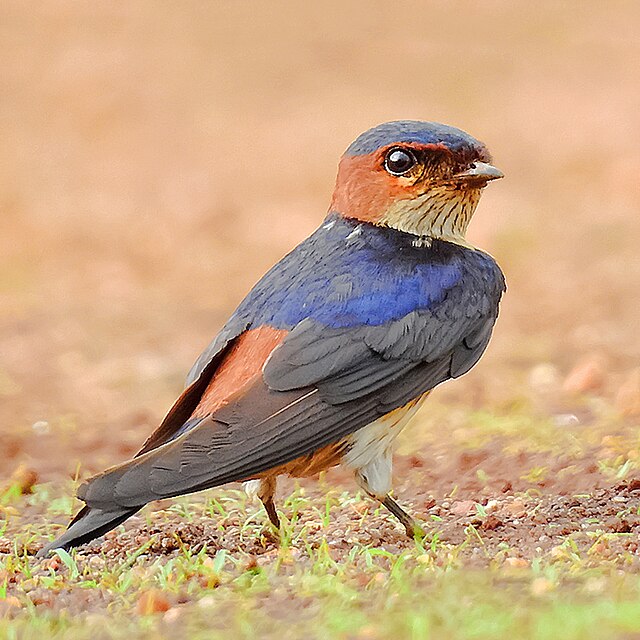
Ceylon Swallow - අටු වැහිළිහිණියා
The Ceylon Swallow (Cecropis hyperythra), also known as the Sri Lanka Swallow, is an elegant and agile bird endemic to Sri Lanka, belonging to the family Hirundinidae. This species is closely related to other swallows but stands out due to its distinctive plumage, streamlined body, and characteristic flight patterns. It primarily inhabits open areas, forest edges, wetlands, and agricultural landscapes, where it can be seen gracefully soaring through the sky in search of flying insects. The Ceylon Swallow is a highly adapted aerial insectivore, feeding on a variety of small insects, including flies, beetles, and mosquitoes, which it catches mid-flight using its swift and acrobatic maneuvers. One of the most striking features of the Ceylon Swallow is its deep rufous underparts, contrasting beautifully with its steel-blue upperparts. It has a long, forked tail, a distinctive feature among swallows, which aids in its exceptional maneuverability.
The tail streamers are particularly prominent in males and are used in courtship displays to attract mates. During the breeding season, which typically occurs from February to May, the Ceylon Swallow constructs cup-shaped mud nests, often attached to buildings, bridges, or rocky cliffs. These nests are lined with soft materials such as feathers and grass, providing a comfortable environment for their eggs. The female usually lays around two to four eggs, which both parents take turns incubating. Once the chicks hatch, they are fed a diet of regurgitated insects until they are ready to fledge. The Ceylon Swallow is a highly social bird, often seen in small flocks, and sometimes forming mixed-species groups with other swallows and martins. Despite its adaptability, this species faces challenges due to habitat loss, pollution, and changes in agricultural practices, which affect insect populations, their primary food source. However, the bird has shown resilience by adapting to human-modified landscapes, frequently nesting in urban and semi-urban areas. Its melodic calls and graceful flight make it a delightful sight for birdwatchers and nature enthusiasts, adding vibrancy to Sri Lanka’s avian diversity.
Conservation efforts aimed at preserving wetlands, open fields, and insect populations are essential for ensuring the continued survival of the Ceylon Swallow. The presence of this bird in an ecosystem is often an indicator of environmental health, as it thrives in areas with abundant insect life and clean air. Birdwatchers visiting Sri Lanka often seek out the Ceylon Swallow, especially in areas like the dry zone and hill country, where it is commonly found. As one of the island’s unique endemic species, it plays a vital role in controlling insect populations and maintaining ecological balance. Its swift and agile movements, combined with its striking coloration, make it a fascinating subject for ornithologists and researchers studying flight mechanics and avian behavior. In Sri Lankan folklore and culture, swallows are often associated with good fortune, and their arrival during seasonal changes is seen as a sign of prosperity. Their role in pollination and pest control further enhances their ecological significance. Though not currently considered endangered, the Ceylon Swallow requires continuous monitoring to ensure that environmental changes do not negatively impact its populations. The protection of its natural habitats, along with sustainable farming and conservation initiatives, will help safeguard this remarkable bird for future generations.
As Sri Lanka continues to develop, balancing conservation with progress remains crucial in maintaining the island’s rich biodiversity. By appreciating and protecting species like the Ceylon Swallow, Sri Lanka upholds its reputation as a haven for endemic wildlife, offering a glimpse into the beauty and complexity of its natural world.