Ceylon Whistling Thrush - ශ්රි ලංකා අරංගයා
The Ceylon Whistling Thrush (Myophonus blighi), also known as the Sri Lanka Whistling Thrush, is a rare and elusive bird endemic to the central highlands of Sri Lanka. Belonging to the Muscicapidae family, this striking bird is best known for its distinctive whistling call, which echoes through the misty forests of the hill country at dawn and dusk. It is primarily found in dense montane forests, particularly near streams and waterfalls, where it thrives in the cool, moist environment of Sri Lanka’s cloud forests. The Ceylon Whistling Thrush is a medium-sized bird, with males exhibiting a deep, glossy blue plumage with a shimmering sheen that becomes visible under sunlight. A bright blue patch on its shoulder contrasts sharply with the darker body, making it one of Sri Lanka’s most visually stunning birds. In contrast, the females are more subdued in color, with dark brown plumage that provides excellent camouflage among the leaf litter and dense undergrowth.
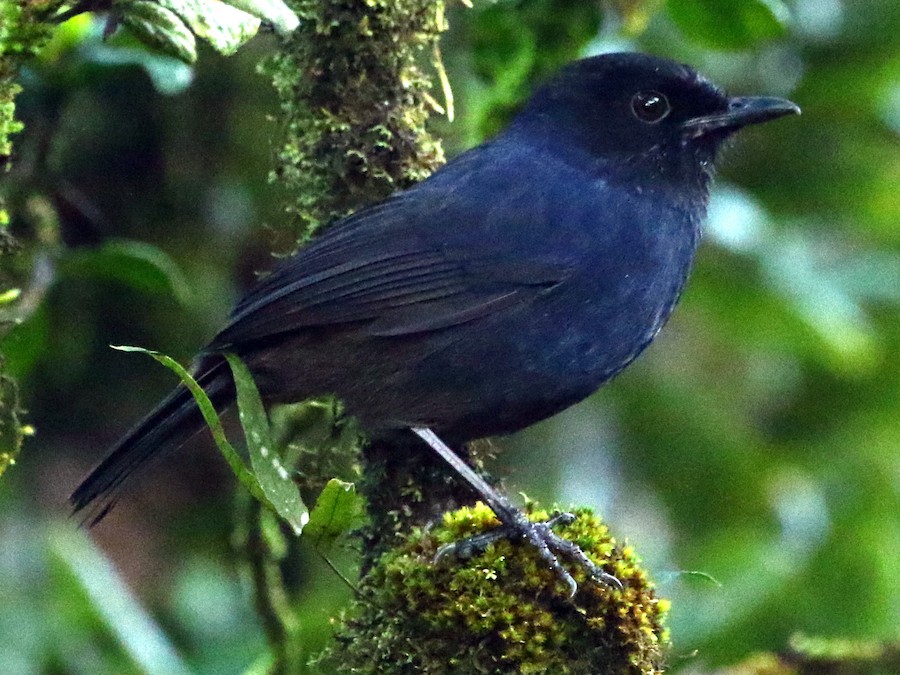
This species is highly territorial and secretive, often remaining hidden in thick vegetation, making sightings extremely rare. It is most commonly observed in Horton Plains National Park, Peak Wilderness Sanctuary, and other high-altitude forests above 1,200 meters. The Ceylon Whistling Thrush is an omnivorous bird, feeding primarily on insects, worms, small amphibians, and berries. It forages on the forest floor, using its strong beak to probe through leaf litter and moss-covered rocks in search of prey. Unlike many thrushes, it is less inclined to hop in the open and prefers to move cautiously in dense vegetation.
During the breeding season, which occurs between March and May, the Ceylon Whistling Thrush builds a cup-shaped nest made of moss, twigs, and leaves, often placing it in concealed locations such as rocky crevices near streams. The female typically lays two to three eggs, which she incubates while the male defends the territory. Once hatched, the chicks are fed by both parents, growing rapidly before fledging into the dense forest.
Despite being a unique and charismatic species, the Ceylon Whistling Thrush is classified as Endangered due to habitat destruction, climate change, and deforestation. The fragmentation of Sri Lanka’s montane forests poses a severe threat to its survival, as this bird relies on undisturbed, pristine habitats with ample water sources. Conservation efforts, including reforestation projects and the protection of national parks, are crucial to ensuring the continued existence of this rare species.
One of the most fascinating aspects of the Ceylon Whistling Thrush is its vocalization. Its melodious and flute-like whistles are often heard at dawn, marking the beginning of the day in Sri Lanka’s highland forests. This hauntingly beautiful call has contributed to its local reputation as a mystical and enigmatic bird, with some folklore associating it with the spirits of the mountains.
For birdwatchers and ornithologists, spotting a Ceylon Whistling Thrush in the wild is considered a significant achievement due to its shy nature and preference for deep forest cover. The best chances of encountering this bird are during the early morning hours when it emerges briefly to sing before retreating into the shadows of the forest.
As a flagship species of Sri Lanka’s montane ecosystems, the Ceylon Whistling Thrush serves as an indicator of environmental health. Its presence signifies a well-preserved and biodiverse habitat, while its decline signals ecological imbalances caused by human activities. Continued research, conservation awareness, and sustainable environmental policies are essential in safeguarding this extraordinary bird and its fragile habitat. Through responsible ecotourism and increased conservation initiatives, Sri Lanka can ensure that future generations will still have the privilege of hearing the ethereal whistle of this iconic and mysterious bird in the heart of its misty highland forests.