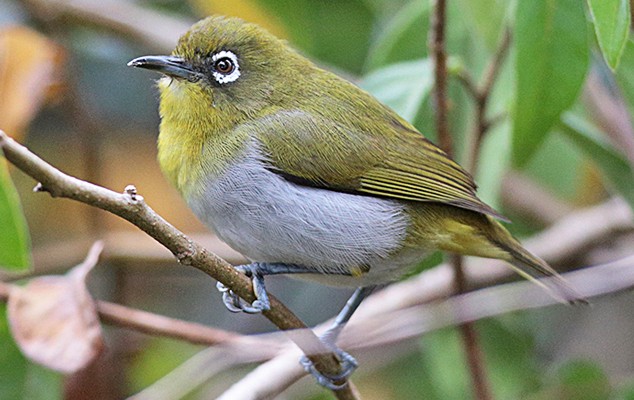
Sri Lanka White-eye - ශ්රී ලංකා සිතෑසියා
The Sri Lanka White-eye (Zosterops ceylonensis) is a small, vibrant songbird endemic to the lush forests and highlands of Sri Lanka. This species belongs to the Zosteropidae family and is a close relative of other white-eye species found across Asia. It is easily recognizable by its bright yellow-green plumage, a distinctive white eye-ring, and a short, pointed beak. This charming bird is commonly seen flitting about in small, noisy flocks, actively foraging for insects, fruits, and nectar in gardens, forests, and plantations.
Unlike its widespread relative, the Oriental White-eye (Zosterops palpebrosus), the Sri Lanka White-eye is found only on the island, primarily inhabiting montane and submontane forests above 1,000 meters. It thrives in regions such as Horton Plains, Hakgala, and the Knuckles Mountain Range, although it can also be spotted in lower elevations, particularly in forested areas and well-vegetated home gardens.
This species is highly social and is often seen in mixed feeding flocks with other small birds, such as sunbirds, flycatchers, and warblers. Their constant movement and active feeding behavior make them a delight to observe, as they flutter between tree canopies, clinging to branches, and hovering momentarily while picking at flowers. The Sri Lanka White-eye primarily feeds on insects, spiders, small caterpillars, and soft fruits such as figs and berries. It also plays an essential role in pollination by feeding on nectar, transferring pollen between flowers, and helping maintain the biodiversity of Sri Lanka’s forests.
During the breeding season, which occurs from February to May and sometimes extends to August, Sri Lanka White-eyes build small, cup-shaped nests using fine grass, moss, and spider webs. These nests are typically suspended between thin branches, providing camouflage and protection from predators. The female lays two to three pale blue eggs, which both parents take turns incubating. Once hatched, the chicks grow rapidly and fledge within a few weeks, learning to forage under the watchful eyes of their parents.
Despite being an endemic species, the Sri Lanka White-eye is classified as Least Concern on the IUCN Red List, as it remains relatively common and adaptable to different habitats, including secondary forests and well-vegetated urban gardens. However, deforestation and habitat degradation continue to pose potential threats, particularly in montane regions where human activities such as agriculture, logging, and land development encroach upon natural ecosystems. Conservation initiatives aimed at preserving Sri Lanka’s highland forests are essential for ensuring the long-term survival of this species.
The Sri Lanka White-eye is also notable for its melodic and high-pitched calls, which include a series of sharp chee-chee notes and soft warbles. These vocalizations help the birds communicate with flock members and establish territories. They are particularly active during the early morning and late afternoon, when they can be seen and heard darting through the treetops in search of food
For birdwatchers and nature enthusiasts, spotting the Sri Lanka White-eye is a rewarding experience. Its curious and fearless nature often brings it close to human observers, making it an excellent subject for photography and study. Its adaptability to various environments, from pristine forests to suburban gardens, highlights its resilience and importance in Sri Lanka’s avian diversity.
As an essential pollinator and insect predator, the Sri Lanka White-eye contributes significantly to the ecological balance of its habitat. Its presence indicates a healthy environment rich in flora and fauna, reinforcing the need for conservation efforts to protect Sri Lanka’s unique and fragile ecosystems. Through sustainable forest management, reforestation projects, and public awareness campaigns, Sri Lanka can continue to safeguard the future of this delightful little bird, ensuring that its cheerful songs and fluttering movements remain a cherished sight in the island’s landscapes.