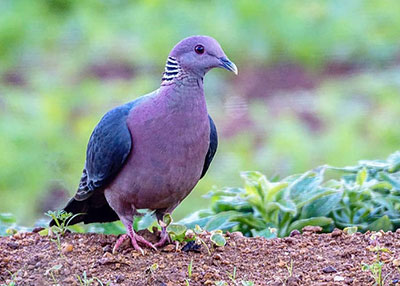
Ceylon Wood Pigeon - ශ්රී ලංකා මයිල පරවියා
The Ceylon Woodpigeon (Columba torringtoniae) is a large, striking pigeon endemic to the forests of Sri Lanka, primarily found in the montane and submontane regions of the island. This elusive bird is part of the Columbidae family and is a close relative of other woodpigeon species found across Asia. However, it is uniquely adapted to Sri Lanka’s highland forests, making it one of the country’s most sought-after endemic bird species. Unlike more common pigeons found in urban areas, the Ceylon Woodpigeon is a shy and secretive forest-dweller, rarely venturing into human settlements. It is usually seen alone or in small groups, foraging for food in dense forests, making it a challenging yet rewarding sight for birdwatchers.
Characterized by its large size, soft grayish plumage, and distinctive scaly patterns on its neck, the Ceylon Woodpigeon is one of the more beautiful pigeons in Sri Lanka. One of its most notable features is the white and black checkerboard-like markings on the neck, which are particularly striking when viewed in good lighting. The rest of its body is covered in a bluish-gray tone, with a purplish-maroon tinge on its wings. Its eyes are deep red, giving it a distinctive gaze that sets it apart from other pigeon species. The bird's tail is long, with a broad terminal band, adding to its graceful appearance when in flight. These unique features make it one of the most recognizable pigeons in Sri Lanka’s forests.
The natural habitat of the Ceylon Woodpigeon is primarily dense montane forests, particularly in regions such as Horton Plains, Sinharaja Forest Reserve, Hakgala, Knuckles Mountain Range, and the Peak Wilderness Sanctuary. It thrives in elevations above 1,000 meters, though it can sometimes be found at slightly lower altitudes in well-forested areas. Preferring undisturbed forests, this pigeon is usually found in tall trees, where it perches quietly, often remaining motionless for long periods. This stillness, combined with its camouflaging plumage, makes it difficult to spot despite its relatively large size.
The diet of the Ceylon Woodpigeon consists mainly of fruits, berries, seeds, and buds, making it an important seed disperser within Sri Lanka’s forest ecosystems. By consuming a variety of fruits and excreting the seeds in different locations, it helps maintain forest regeneration and plant diversity. In addition to fruits, it may occasionally feed on insects and small invertebrates, particularly during the breeding season when it requires extra nutrients. The pigeon is often seen foraging in the treetops, though it sometimes descends to the ground to pick fallen fruits.
The breeding season of the Ceylon Woodpigeon occurs primarily from March to May and again from August to October. During this time, males perform soft cooing calls and display aerial courtship flights to attract females. Once a pair is formed, they work together to build a simple platform nest made of twigs, usually placed on a tree branch or a dense shrub. The female typically lays one or two eggs, which both parents take turns incubating. The chicks hatch after about two weeks and are fed by regurgitation, a common feeding method among pigeons. After several weeks, the young birds fledge, becoming independent but staying close to their parents until they are strong enough to survive on their own.
Although the Ceylon Woodpigeon is still found in protected forests, it faces significant threats due to deforestation, habitat loss, and hunting. The conversion of montane forests into tea plantations, agricultural lands, and human settlements has drastically reduced its natural habitat. Illegal logging, forest fragmentation, and climate change further threaten the pigeon’s survival, as these factors contribute to the loss of suitable nesting and feeding sites. Additionally, in some regions, these birds are hunted for their meat, though this practice is less common today due to conservation efforts.
The International Union for Conservation of Nature (IUCN) has classified the Ceylon Woodpigeon as "Vulnerable", meaning its population is declining and in need of urgent conservation measures. Several initiatives are being carried out to protect this species, including the expansion of protected areas, reforestation projects, and awareness campaigns to educate local communities about the importance of conserving Sri Lanka’s endemic wildlife. Strict anti-poaching laws and sustainable forest management practices are also crucial in ensuring the long-term survival of the species.
For birdwatchers and nature lovers, spotting a Ceylon Woodpigeon is considered a rare and special experience. Due to its secretive behavior, patience and keen observation skills are needed to find one in the wild. The best chances of sighting this bird are in the early morning or late afternoon, when it is most active. Birdwatching in Horton Plains or Sinharaja often provides good opportunities to see this elusive species, as these locations have dense forests with abundant food sources.
Beyond its ecological role, the Ceylon Woodpigeon holds cultural significance in Sri Lanka. Birds have long been a part of Sri Lankan folklore, poetry, and religious traditions, symbolizing peace, nature, and harmony. While the Ceylon Woodpigeon may not be as famous as other endemic birds like the Sri Lanka Junglefowl, it remains a symbol of the island’s rich biodiversity and natural heritage.
In conclusion, the Ceylon Woodpigeon is a fascinating and essential species within Sri Lanka’s montane forest ecosystems. Despite its declining population, conservation efforts continue to offer hope for its survival. By promoting eco-tourism, reforestation, and stricter protection laws, Sri Lanka can ensure that future generations will continue to witness the beauty of this remarkable bird. The Ceylon Woodpigeon serves as a reminder of the importance of preserving Sri Lanka’s natural environment, making it a valuable species that deserves continued conservation attention.