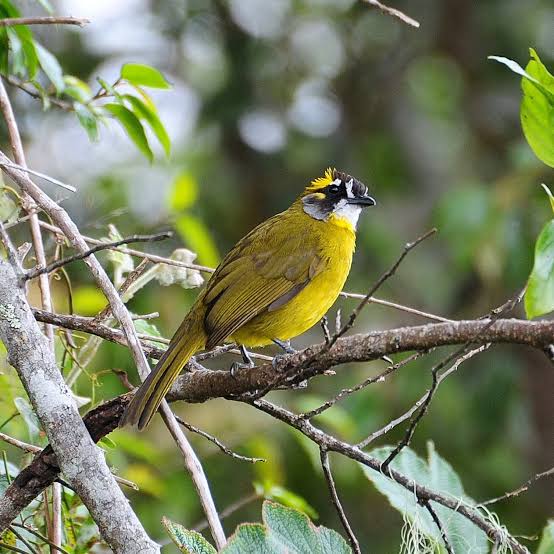
Yellow eared Bulbul - කහකන් කොණ්ඩයා
The Yellow-eared Bulbul (Pycnonotus penicillatus) is one of Sri Lanka’s
most striking and unique birds. Endemic to the island, this species is
found exclusively in the highland forests, particularly in the wet zone.
With its vibrant yellow ear patches, olive-green body, and musical calls,
it plays an essential role in the country’s rich biodiversity. Despite its
beauty, habitat loss poses a significant threat to its survival. This
article provides a comprehensive insight into the Yellow-eared Bulbul,
covering its physical characteristics, habitat, diet, behavior, breeding
patterns, and conservation status.
The Yellow-eared Bulbul is a medium-sized bird, typically measuring around 20 cm (8 inches) in length. Its most distinctive feature is the bright yellow patch behind its eyes, resembling "ears." The head is adorned with black-and-white streaks, giving it a striking contrast against its yellow markings. The body is predominantly olive-green, with a slightly paler underbelly. Its beak is short and slightly curved, suited for feeding on fruits and insects. The tail is relatively long, with dark feathers tipped in white. Males and females look alike, making it difficult to differentiate between the sexes based on appearance alone.
Being an endemic species, the Yellow-eared Bulbul is found only in Sri Lanka, primarily in the high-altitude forests of the central hills. It prefers elevations between 1,000 to 2,500 meters above sea level, thriving in montane forests, tea estates, and forest edges. Notable locations where this bird can be spotted include Horton Plains National Park, Sinharaja Forest Reserve, Knuckles Mountain Range, and the forests surrounding Nuwara Eliya and Ella.
The dense foliage of these forests provides ample cover for nesting and foraging. Unlike many other bulbuls that adapt to urban environments, the Yellow-eared Bulbul is more dependent on natural forests, making it particularly vulnerable to deforestation and habitat degradation.
The Yellow-eared Bulbul is an omnivore, with its diet consisting mainly of fruits, berries, seeds, and insects. It plays a crucial role in forest ecosystems as a seed disperser. By consuming a variety of fruits and excreting seeds elsewhere, it aids in the regeneration of forests.
The Yellow-eared Bulbul is an active and social bird, often seen in pairs or small family groups. It is not as aggressive as some other bulbul species but is known to defend its nesting territory. The bird’s call is loud, melodious, and distinctive, consisting of a series of whistling and chattering sounds. These calls serve various purposes, such as attracting mates, warning others of danger, and communicating with group members.
Unlike some bulbul species that prefer open areas, the Yellow-eared Bulbul spends much of its time in dense foliage, flitting from branch to branch in search of food. It is not a migratory bird and remains within its preferred habitat year-round.
The Yellow-eared Bulbul is an important symbol of Sri Lanka’s biodiversity. Its presence in montane forests indicates a healthy ecosystem. Moreover, as a seed disperser, it helps in maintaining the balance of plant life in its habitat. Birdwatchers and nature enthusiasts appreciate this species for its vibrant appearance and beautiful calls, making it a favorite subject for photography and research.
If you wish to observe the Yellow-eared Bulbul in its natural habitat, consider visiting Horton Plains National Park or the forests of Nuwara Eliya. The best time to see them is early in the morning, when they are most active. Carrying binoculars and a good camera can enhance your birdwatching experience. Listen for their distinctive whistling calls and watch for their yellow markings in the foliage.
The Yellow-eared Bulbul is a fascinating and beautiful bird that adds to the richness of Sri Lanka’s wildlife. However, habitat destruction and environmental changes threaten its survival. Conservation efforts are crucial to ensuring that future generations can continue to enjoy and appreciate this remarkable species. By protecting Sri Lanka’s forests and raising awareness about endangered species, we can help preserve the unique biodiversity of the island.